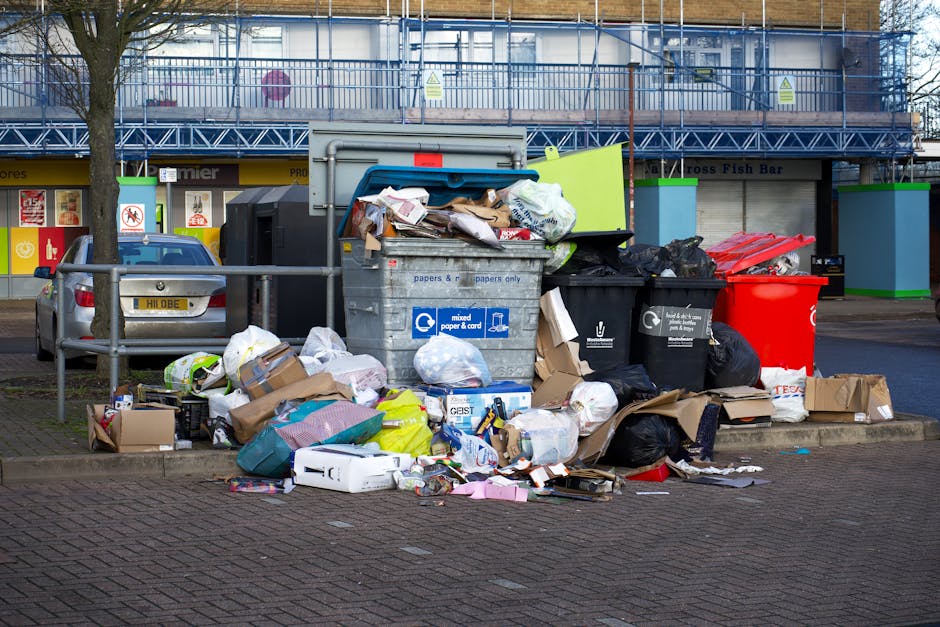
Small street access rubbish collection issues in Wanstead

Narrow roads, parked cars, tight turning space, and awkward property layouts can turn a simple rubbish collection into a bit of a headache. If you are dealing with Small street access rubbish collection issues in Wanstead, you are probably already aware that the problem is rarely just "too much waste". More often, it is about getting a vehicle close enough, keeping the job safe, and avoiding the knock-on effects of blocking neighbours or damaging property. In Wanstead, that can mean one missed detail is enough to slow everything down.
This guide breaks the issue down in plain English. You will learn what small street access collections involve, why they matter, how the process usually works, and what practical steps make the biggest difference. There is also a checklist, a comparison table, and a realistic example so you can judge your own situation properly. Truth be told, access planning is often the difference between a smooth clearance and a frustrating one.
Why small street access rubbish collection in Wanstead matters
Small street access sounds like a minor inconvenience until the collection vehicle arrives and reality steps in. A van may not be able to park safely outside the property. A larger lorry may not fit at all. Even when access is possible, there can be issues with corners, low-hanging branches, tight bays, limited waiting space, or a street that gets busy fast in the morning. Wanstead has plenty of residential roads where these small details matter more than people expect.
The reason this matters is straightforward: waste has to be removed safely, legally, and without causing avoidable disruption. If access is poor, the job can take longer, cost more, or require a different approach altogether. That can affect household clearances, flat clearances, garden waste, furniture disposal, and even builders waste. A narrow lane is never just a narrow lane. It is a planning issue.
There is also the neighbour factor. If rubbish piles up on the pavement while you wait for a collection, it can block footpaths and create tension on a street where everyone is already trying to squeeze past each other. Nobody wants that awkward half-minute exchange over a wheelie bin and a parked car. It happens. Too often, actually.
For households and businesses, the big advantage of understanding the access challenge early is control. You can avoid surprises, choose the right vehicle or method, and reduce the chance of a failed collection. If the job involves bulky furniture or mixed waste, it may help to look at a broader waste removal approach rather than assuming a standard pickup will do the trick.
How small street access rubbish collection issues in Wanstead works
In practical terms, the process starts long before the vehicle arrives. A sensible provider will want to know the type of waste, the amount, whether the items are bulky, and how close the vehicle can get to the property. With poor access, the collection method may change from a straightforward load-and-go arrangement to a more manual carry-out from the building to the vehicle.
That sounds simple, but the details matter. For example, if a collection team has to park around the corner and walk waste along a narrow pavement, they need enough time, safe lifting conditions, and a route that will not upset neighbours or passers-by. If it is a flat clearance on an upper floor, stairs, shared entrances, and time restrictions can make access even more sensitive. In those cases, a dedicated flat clearance service may be a better fit than a general rubbish collection.
There are also vehicle size decisions. A compact van may be more suitable for certain Wanstead streets than a larger vehicle, even if that means more careful loading. On the other hand, if the waste volume is high, multiple trips or a team-based carry system may be more efficient. There is no one-size-fits-all answer, and that is the part people sometimes miss.
For bigger loads from a house or a property being cleared between tenancies, a structured house clearance or home clearance approach can be easier to manage than piecemeal rubbish removal. It keeps the job organised and makes access planning much easier from the start.
In short, the collection usually follows this logic:
- Assess the waste type and volume.
- Check access, parking, and loading space.
- Choose the most suitable vehicle and team size.
- Plan the carry route if the vehicle cannot stop directly outside.
- Remove, separate, and load the waste safely.
- Dispose of or recycle the material through the proper channels.
Key benefits and practical advantages
When small street access is handled properly, the benefits are very real. The job becomes safer, faster, and less stressful. You also reduce the chance of awkward delays that can push a collection into another day. If you have ever had a skip or vehicle stuck in a narrow street at 7:30 in the morning, you will know exactly why planning matters.
One of the biggest advantages is less disruption. A well-planned collection can keep pavements clear, reduce noise time, and avoid repeated back-and-forth with the team. That is especially useful in Wanstead where parking is often tight and a collection that drags on can affect several households at once.
Another clear benefit is better handling of bulky or awkward items. Sofas, wardrobes, garden waste, and renovation leftovers do not always behave nicely. They snag on door frames, scrape walls, and make turns awkward. A methodical clearance reduces the chance of damage and avoids the classic "how did it get in here?" moment on the way out. Honestly, furniture rarely respects the exit route it used on the way in.
For people comparing removal options, access-friendly planning can also improve value. If a provider knows the access situation in advance, they can quote more accurately and match the right service to the job. That can be useful when you are comparing pricing and quotes and want a fair estimate rather than a vague guess.
Practical advantages at a glance
- Less risk of failed collections or wasted visits
- Safer movement of bulky waste through tight spaces
- Cleaner coordination with neighbours and parking conditions
- More accurate scheduling and pricing
- Better chance of recycling items correctly
Who this is for and when it makes sense
This issue affects more people than you might think. It is not just a problem for one-off house clearances. In Wanstead, small street access can affect landlords, homeowners, tenants, tradespeople, offices, and even small businesses trying to shift waste without causing a scene outside the building.
If you are clearing a loft, garage, or shed, access can be tricky because waste often has to travel through the property before it reaches the street. A cramped hallway or steep staircase can make the job more demanding than the pile of rubbish suggests. That is one reason a planned loft clearance or garage clearance often goes more smoothly than an improvised "we will just move it out later" approach. Later usually arrives with a curse word or two.
It also makes sense for:
- people moving out of a flat on a narrow road
- households with bulky furniture and limited parking
- landlords arranging end-of-tenancy clearances
- businesses needing discreet waste handling
- builders or renovators with debris to shift from tight residential access points
If the waste is office-related, shared entrances, lifts, and loading windows can become just as important as street access. In those cases, a well-timed office clearance can help keep disruption down and avoid blocking the wrong door at the wrong moment.
Step-by-step guidance
If you are trying to get a collection right the first time, here is the practical sequence that usually works best.
1. Measure the access, not just the waste
People often estimate the pile, but forget the route. Check the width of gates, side passages, staircases, and the street itself. Think about whether a van can stop nearby without causing issues. If a collection team has to carry items a long distance, that affects timing and effort.
2. Identify the waste type clearly
Mixed loads can be harder to manage than expected. Furniture, bagged household waste, garden cuttings, wood, broken appliances, and building debris may each need different handling. If the load is mainly furniture, a focused furniture clearance or furniture disposal option may be more efficient.
3. Share the access challenge early
Do not wait until the morning of the collection to mention the narrow road or awkward parking. Be specific. Say whether the vehicle can stop outside, whether there is permit parking, and whether someone may need to open gates or provide access. A decent provider can only plan properly if they know the constraints.
4. Prepare the route
Move cars, unlock gates, clear pathways, and make sure there is a safe line from the waste pile to the vehicle. If the route includes shared hallways or communal areas, keep them tidy. A clear route saves time and reduces the chance of scratches, knocks, and those little accidents that somehow become everyone's problem.
5. Separate what can be reused or recycled
Separating waste before the collection helps with loading and improves recycling outcomes. Keep reusable items apart from contaminated waste if possible. For example, dry wood, metals, and certain furniture items may be handled differently from mixed rubbish.
6. Confirm the disposal and paperwork expectations
For many jobs, especially commercial or builders waste, it is sensible to ask how the waste will be handled after removal. Proper duty of care matters. For more information on how a provider presents its approach, you may want to review recycling and sustainability alongside the service details.
Expert tips for better results
Small access jobs become much easier when you think like the team doing the lifting. A few habits make a noticeable difference.
First, take photos before you book. A couple of clear images of the waste, the front access, and the street help a provider judge whether the job will need a smaller van, extra labour, or a different time slot. This is particularly useful on streets where parking changes through the day.
Second, plan for carry distance. Even if the street is only a little narrow, an extra 20 or 30 metres of carrying can change the whole rhythm of the job. It is not dramatic, but it matters. You can almost hear the pace change when a route is poorly planned.
Third, keep the job grouped. If you have a loft, garage, and garden to clear, it may be tempting to handle them separately. Yet combining loads into one organised visit can often be easier, provided the access is mapped out properly. For some properties, a broader garden clearance can be bundled with other waste rather than booked as a standalone visit.
Fourth, ask about vehicle flexibility. A small van may suit a tight Wanstead street better than a larger one. That simple choice can prevent congestion and reduce the risk of blocking neighbours. It sounds obvious, but obvious things are the ones people forget when they are under pressure.
Fifth, stay realistic about timing. A narrow-access clearance nearly always takes longer than a driveway pickup. Leaving breathing room in the schedule reduces stress for everyone involved, including the poor soul trying to carry a mattress down a narrow stairwell.
Common mistakes to avoid
A lot of collection problems are avoidable. They happen because people make assumptions about access rather than checking it properly.
- Assuming a large vehicle will fit: roads can look wider in the evening than they really are.
- Not mentioning parking restrictions: this can create delays or force a reschedule.
- Leaving waste in a difficult place: if it is trapped in the loft, shed, or rear garden, that needs planning.
- Mixing bulky furniture with general waste: it can complicate loading and sorting.
- Forgetting about neighbours: blocked access and noisy lifting can become an avoidable issue.
- Booking too late: the best time to solve access is before anyone turns up.
One subtle mistake is underestimating the exit path from inside the property. A sofa might fit through the front door with a bit of angling, but a hallway corner or bannister can turn the job into a puzzle. That is where experience helps. And a tape measure. Always a tape measure.
Tools, resources and recommendations
You do not need fancy equipment to manage a small access collection well, but a few basic tools can make the process safer and more efficient.
- Tape measure: useful for checking gates, doors, corridors, and street space.
- Mobile phone camera: take photos of access points and waste piles before booking.
- Gloves and sturdy footwear: important if you are moving smaller items yourself.
- Labels or marker tape: handy for separating items to keep, recycle, or remove.
- Clear bags or crates: helps keep loose rubbish manageable during carry-out.
For people handling mixed domestic waste, a service that can adapt to the property layout is usually the best choice. If the job is mainly residential, an experienced home clearance provider may be able to coordinate the load more cleanly than a one-off general collection approach.
It can also be helpful to review service information on trust and handling. Pages such as health and safety policy, insurance and safety, and about us give you a better sense of how seriously a company treats access, liability, and safe work practices. That reassurance matters more than people admit.
Law, compliance, standards and best practice
Any rubbish collection must be handled in line with relevant UK waste responsibilities and general safety expectations. Without turning this into a legal lecture, the main point is simple: waste should be carried, transferred, and disposed of responsibly, with attention to who handles it and where it goes. That applies whether the job is a domestic clear-out or a commercial waste movement.
For access-related jobs, best practice usually includes:
- keeping access routes as clear as possible
- avoiding unnecessary obstruction of pavements or driveways
- using suitable lifting methods for heavy or awkward items
- protecting communal areas, walls, and door frames
- ensuring waste is transported and managed by a properly organised service
If a building has shared access, the provider should be mindful of residents, neighbours, and any house rules that affect loading. Business premises, meanwhile, may have their own waste handling expectations, and a business waste removal arrangement can be a better match than ad hoc disposal when access is tight or timing is sensitive.
Insurance is another area worth taking seriously. If access is awkward, the risk of accidental knocks or movement damage rises slightly. Not hugely, but enough to matter. A reputable provider should be able to explain how they manage that, and what is covered. If they dodge the question, that is usually a sign to keep looking.
Options and comparison table
Not every access problem needs the same solution. Sometimes a standard collection works perfectly. Sometimes you need a smaller van, more labour, or a more comprehensive clearance. Here is a practical comparison.
| Option | Best for | Advantages | Limitations |
|---|---|---|---|
| Standard rubbish collection | Easy street access, small to medium loads | Fast, simple, usually the least disruptive | Can fail or slow down if parking is very tight |
| Small van collection | Narrow roads, limited stopping space | Better access on tight streets, more flexible parking | May need more trips for large volumes |
| Carry-out clearance | Properties where vehicle access is limited | Works when the vehicle cannot stop outside | Takes more time and labour |
| Full property clearance | Flats, houses, estates, or big mixed loads | Organised, efficient, good for complex access | Needs better preparation and clearer booking details |
If the issue is mainly furniture, a dedicated furniture-focused service often gives a cleaner result than a generic rubbish job. Likewise, builders waste tends to be heavier and more awkward, so it helps to look at builders waste clearance if renovation debris is part of the load.
Case study example
Imagine a terraced property in Wanstead on a narrow residential street with parked cars on both sides. The resident needs several items removed: a wardrobe, a broken chest of drawers, bagged clutter from the loft, and a few garden bags left near the back door. There is no driveway, and the front entrance is a tight squeeze.
On the surface, it looks like a quick job. But the access changes everything. The team needs to park a little way down the road, carry items carefully along the pavement, avoid the neighbours' cars, and navigate the hallway without damaging the walls. The wardrobe has to be broken down before it can leave the property. The loft bags are lighter, but they still take time because of the stairs.
In a setup like this, the best result usually comes from a short pre-visit call, a few photos, and a realistic estimate of how far the waste must be carried. The resident saves time because the team arrives knowing what to expect. The street stays calmer because the work is organised. And nobody has to make that awful second trip because one item was "just a bit bigger than expected".
It is a small example, but that is often how these jobs go. The visible problem is waste. The real problem is access.
Practical checklist
Before you book or begin a collection, run through this checklist. It is simple, but it catches most of the common issues.
- Have I measured gates, doors, or stairways that matter?
- Do I know whether a vehicle can park close enough to load safely?
- Have I mentioned any permit parking, busy times, or access restrictions?
- Is the waste sorted into bulky items, bagged rubbish, and special loads?
- Have I cleared the route from the property to the street?
- Are communal areas protected and left tidy?
- Do I understand whether the job needs a general collection or a more specific clearance service?
- Have I checked the provider's safety, insurance, and disposal approach?
- Am I allowing enough time for a narrow-access collection?
- Have I taken photos in case the access needs explaining later?
If you can answer yes to most of those, you are in good shape. If not, do a quick reset before the booking. It genuinely saves hassle.
Get a free quote today and see how much you can save.
Conclusion
Small street access rubbish collection issues in Wanstead are rarely dramatic, but they are very real. The difference between a smooth collection and a messy one usually comes down to planning: knowing the access limits, choosing the right method, and being honest about the street conditions before anyone arrives. Once you do that, the job becomes much more manageable.
Whether you are clearing a flat, shifting bulky furniture, emptying a garden, or handling mixed household waste, the same rule applies. Respect the access, and the rest tends to fall into place. Ignore it, and even a simple collection can feel oddly exhausting.
Take a breath, plan the route, and keep it practical. That is usually enough.
Frequently Asked Questions
What are small street access rubbish collection issues in Wanstead?
They are the practical problems that happen when a rubbish collection vehicle cannot easily reach a property because the road is narrow, parking is tight, or the access route inside the building is awkward.
Why does narrow access affect rubbish collection so much?
Because waste still has to be carried, loaded, and removed safely. If the vehicle cannot park near the property, the job takes longer and may need a different vehicle or more labour.
Can rubbish be collected if the van cannot park directly outside?
Often, yes. The team may use a carry-out method from the property to the vehicle, but that depends on the distance, the type of waste, and whether the route is safe and practical.
How should I prepare for a collection on a narrow Wanstead street?
Measure access points, move vehicles if possible, clear the route, take photos, and explain the parking situation when booking. Small details make a big difference here.
Is a small van better for tight street access?
Usually, yes. A smaller van can be easier to position on narrow streets, though the best choice still depends on the amount and type of waste being removed.
What types of waste are hardest to remove from small-access properties?
Bulky furniture, builders debris, heavy mixed rubbish, and awkward items from lofts or basements are usually the most difficult because they are harder to manoeuvre through tight spaces.
Do I need a full clearance service or just rubbish removal?
If you have one-off bags or a small mixed load, a simple removal may be enough. If the property has multiple rooms, awkward access, or a large amount of clutter, a more structured clearance service is often better.
How can I avoid delays with a collection?
Be upfront about access, share photos, confirm parking conditions, and make sure the waste is ready to go. Most delays happen because the booking details were too vague.
Are there safety concerns with carrying waste through narrow entrances?
Yes. Narrow hallways, stairs, and shared entrances increase the risk of knocks, slips, or strain injuries, so proper planning and safe lifting matter a lot.
Does access difficulty affect pricing?
It can. If a collection needs extra labour, a longer carry distance, or more time, the price may differ from a straightforward roadside pickup.
What should I ask a provider before booking?
Ask what size vehicle they use, how they handle narrow access, whether they are insured, how they manage recycling, and what happens if parking turns out to be tighter than expected.
Where can I learn more about the company's approach to safety and responsibility?
Useful background is often found on pages such as health and safety policy, insurance and safety, and recycling and sustainability. They help you understand how the work is handled beyond the front gate.
Is it better to wait until the street is quieter?
Sometimes, yes. A quieter time can make loading easier, reduce disruption, and improve safety. It depends on local parking patterns and how much space the team needs to work.
What if I am not sure whether my access is too tight?
If in doubt, take photos and ask for advice before booking. It is much easier to adjust the plan early than to discover on the day that a large item will not move cleanly.